 Reviews


 Proudly American


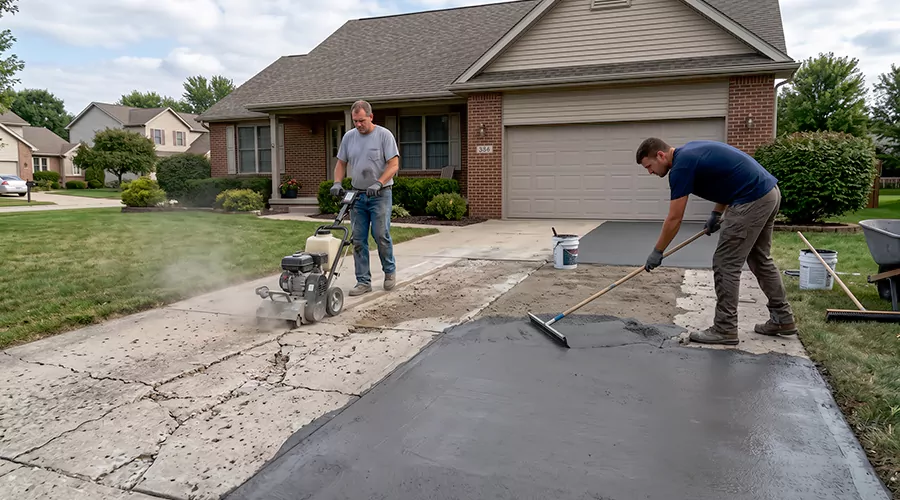
Uneven concrete can be resurfaced when the height difference is shallow and the slab underneath is stable. Burst pipe clean up may be needed when a burst pipe has caused water to pool around or beneath the concrete, potentially affecting the surface or underlying materials. Resurfacing can correct surface waves or minor low spots, but it cannot permanently fix a slab that has sunk because of soil movement or a void below the concrete.
The key question is why the surface is uneven. Surface wear needs a different repair than a sunken slab section.
What Types of Uneven Concrete Can Be Resurfaced?
Minor surface irregularities are often suitable for an overlay. These problems affect the top of the slab without showing major movement in the base.
Good candidates include shallow dips or worn finishes. Minor pitting and small patched areas can also respond well.
Concrete restoration becomes more complicated when the entire slab has moved rather than only the surface wearing unevenly.
When Will Resurfacing Not Fix Uneven Concrete?
Resurfacing does not solve settlement. An overlay follows the slab below it and adds little structural support. If a patio section sank because soil washed away underneath, adding material on top treats the height difference without fixing the void.
| Uneven Condition | Better Starting Point |
|---|---|
| Minor surface variation | Resurface |
| Shallow interior low spot | Leveling overlay |
| Stable pitting | Patch then resurface |
| Sunken slab section | Lift slab first |
| Major vertical crack | Investigate movement |
| Crumbling slab | Repair or replace |
A stable slab can receive a new surface. A moving slab needs the movement corrected first.
How Can You Tell if the Slab is Settling?
Settlement usually creates height changes between concrete sections rather than a gentle surface dip. Water pooling where it never collected before can provide another clue.
Watch for:
- One side of a crack sits higher.
- A slab has pulled away from steps.
- Water collects beside a sunken section.
- Expansion joints no longer line up.
- A corner rocks under weight.
- Cracks continue widening.
- A walkway slopes toward the building.
- Previous patches keep cracking.
These signs suggest that resurfacing alone may not last.
Can Self-Leveling Material Fix Uneven Concrete?
Some self-leveling cement products can correct shallow interior irregularities when the slab is sound. They create a flatter surface before another floor finish is installed.
Exterior work requires a product specifically rated for outdoor exposure. A self-leveling layer should not replace slab lifting when an exterior section has settled.
Product thickness limits also matter because thin materials can fail in deep depressions.
Should Sunken Concrete Be Lifted Before Resurfacing?
Usually, yes. Slab lifting can raise a settled section by filling voids below the concrete. Mudjacking or polyurethane foam are common methods for suitable slabs.
In 2026, professional concrete leveling commonly costs about $661 to $1,872 for many residential projects.
A practical repair sequence is:
- Identify why the slab settled.
- Correct drainage where possible.
- Lift or stabilize the slab.
- Repair suitable cracks.
- Prepare the surface.
- Apply the resurfacing system.
Correcting the level first reduces the chance that a new finish will repeat the old movement.
Can Uneven Patios Be Resurfaced?
Yes, when the unevenness is limited to the surface and the patio remains stable. Concrete patio resurfacing can renew a worn slab while correcting small texture differences.
A patio with large height differences needs another plan. Raised edges can remain trip hazards even after a thin coating is applied.
Check whether the problem comes from surface erosion or settlement. Tree-root movement and base washout also point to deeper causes. Previous patch buildup can create surface unevenness without slab movement.
How Much Unevenness Can Resurfacing Correct?
There is no single depth that works for every product. Thin overlays handle minor surface defects, while thicker leveling systems may correct larger variations within their rated limits.
Large changes measured in inches should raise questions about slab movement.
Separate surface shape from slab position. If the slab itself sits at the wrong elevation, leveling or replacement is usually better than building up a thick surface layer.
What Does Resurfacing Cost in 2026?
Basic resurfacing commonly costs about $1,000 to $5,000 for many residential projects in 2026. The concrete resurfacing cost rises when the slab needs leveling or extensive preparation first.
| Work | Typical 2026 Planning Range |
|---|---|
| Basic resurfacing | $1,000 to $5,000 total |
| Concrete leveling | $661 to $1,872 for many projects |
| Basic patio resurfacing | $3 to $5 per sq. ft. |
The cheapest surface treatment can become expensive if settlement causes it to crack again.
What Can You Check Yourself?
A long straightedge can help show whether the problem is a shallow dip or a change in slab elevation.
- Place a straightedge across the uneven area.
- Measure the largest gap below it.
- Check joints for height differences.
- Look for cracks through the low area.
- Add a small amount of water nearby.
- Note where it collects.
Do not intentionally flood the slab. The goal is only to observe drainage.
When is Replacement Better?
Replacement becomes more practical when concrete is broken into many moving pieces or has deep deterioration. Resurfacing needs a stable base, while lifting needs concrete strong enough to move as one piece.
Consider replacement when:
- Large sections are crumbling.
- Reinforcing steel is exposed.
- Several cracks have vertical displacement.
- The slab has severe frost damage.
- Previous leveling failed repeatedly.
- The base needs major correction.
When Should You Call a Professional?
Professional assessment is useful when the source of unevenness is unclear. A height difference between adjoining slabs may indicate settlement that needs lifting rather than resurfacing.
Seek professional help when:
- A trip edge is growing.
- The slab moves underfoot.
- Water drains toward the building.
- Cracks continue changing.
- Large areas have settled.
- Structural concrete is involved.
How Can You Keep Concrete Level After Repair?
Drainage control helps prevent new settlement. Water that repeatedly flows beneath a slab can wash soil away and create new voids.
- Direct downspouts away from concrete.
- Repair leaking outdoor plumbing.
- Keep joints sealed where appropriate.
- Watch for pooling after storms.
- Repair stable cracks promptly.
- Avoid overwatering soil beside the slab.
Conclusion
Uneven concrete can be resurfaced when the problem is shallow and the underlying slab remains stable. Surface waves or minor low spots are good candidates. Sunken sections and vertical cracks usually need leveling or structural correction first. A simple straightedge test can help separate surface unevenness from slab movement. Fix the cause before adding a new overlay if the slab continues to settle.
Frequently Asked Questions
Can resurfacing level a sunken slab?
Not reliably. A sunken slab usually needs lifting or another correction before the surface is renewed.
Can self-leveling concrete be used outside?
Some products are rated for exterior use. The product must match the exposure and required thickness.
Is uneven concrete always a structural problem?
No. Minor surface wear can create unevenness without movement below the slab.
Can a patio be leveled and resurfaced?
Yes. A settled patio can sometimes be lifted first and resurfaced after the slab becomes stable.
How can I tell if concrete is still moving?
Changing crack width or increasing height differences over time suggest ongoing movement.
Is resurfacing cheaper than replacement?
Usually, when the existing slab remains structurally sound and needs mainly surface correction.